A buyer sourcing Kid's Winter Slippers quickly discovers that the category is not one product. It is a set of product families defined by age. An infant needs a soft, enclosed bootie that stays on the foot and can be worn in a crib. A toddler needs a slipper that grips the floor, is easy to put on, and can survive being dragged across a playroom. A preschool child needs a slipper that supports active play and is easy to clean. An older child needs a slipper that looks mature, fits securely, and can handle a sleepover or a trip to a friend's house. The styles available for each age group are different because the functional requirements are different. For a procurement team, the age group is the first segmentation variable, and the style is the second.
This guide is written for buyers who are building a Kid's Winter Slippers range for retail, e-commerce, or distribution. It explains the main styles available for each age group, the design features that matter for each group, the material and safety considerations, and the sizing and assortment decisions that a buyer must make. The content is organized around the age groups so that each section can be used as a standalone reference. It includes the product parameters and documentation that a reliable supplier should provide. Our factory at Xiamen Everpal Trade Co., Ltd. produces Kid's Winter Slippers across the age range, and the guidance below reflects the design and procurement standards we apply to the products we supply.
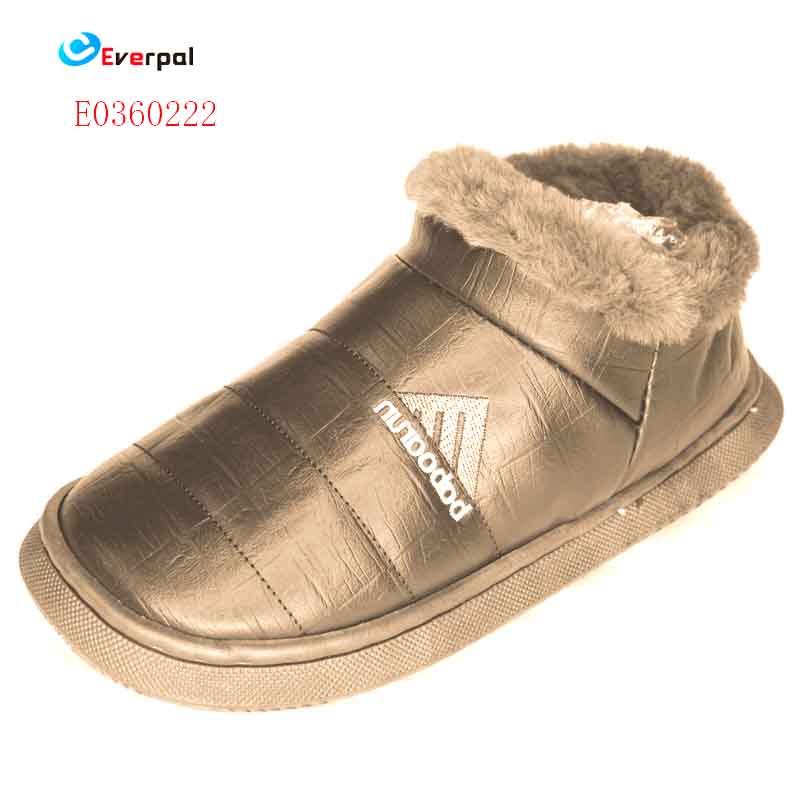
Infants and toddlers need a slipper that prioritizes warmth, security, and ease of use over style variety. The infant slipper is essentially a soft bootie. It is designed to keep the foot warm without restricting movement, and it is often worn with or without socks. The toddler slipper adds a grip sole and a more structured upper so that the child can walk and run indoors without slipping. The main styles in this age group are the bootie, the moccasin, the slip-on with elastic gores, and the hook-and-loop strap slipper. Each style has a different balance of security, ease of entry, and durability.
The timeline below describes how a child's needs change from infancy to the toddler stage and how the slipper style should follow that change.
The table below summarizes the main infant and toddler styles and their key features.
| Style | Age Group | Key Feature | Procurement Note |
| Soft bootie | 0-9 months | Elastic ankle, soft sole | Prioritize warmth and stay-on fit |
| Moccasin | 9-18 months | Soft upper, elastic band | Add non-slip sole for cruising |
| Slip-on with back elastic | 18-36 months | Easy entry, secure heel | Check the elastic durability |
| Hook-and-loop strap | 18-36 months | Adjustable fit, secure closure | Check strap cycle life |
At Xiamen Everpal Trade Co., Ltd., our factory produces Kid's Winter Slippers for the infant and toddler segment with soft bootie, moccasin, and strap styles. We specify the upper material, the sole hardness, and the closure type for each style, and we test the stay-on fit and the non-slip performance. The goal is to provide a slipper that meets the functional needs of the age group, not just the visual appeal.
For a buyer, the infant and toddler segment is a safety-sensitive category. The slipper should not have small parts that can detach, the materials should meet the applicable children's product requirements, and the sole should provide reliable grip on tile and wood floors. The procurement team should request the material certificates and the safety test reports for the destination market before placing the order.
Preschool and early school children are active, independent, and increasingly opinionated about what they wear. The slipper must support running, jumping, and play, and it must be easy for the child to put on and take off without adult help. The main styles in this age group are the closed-back scuff, the clog, the slip-on with a memory foam footbed, and the novelty character slipper. The closed-back scuff is the most versatile. It has a back that holds the heel, a flexible sole, and a simple slip-on entry. The clog is a backless style that is easy to step into but less secure during active play. The novelty slipper uses a character or animal design to appeal to the child, but the underlying construction must still meet the functional requirements.
The checklist below provides the procurement decision points for this age group.
The table below compares the main preschool and early school styles.
| Style | Entry | Security | Durability | Best Use |
| Closed-back scuff | Slip-on | High | High | Active indoor play |
| Clog | Step-in | Moderate | Moderate | Quick trips, casual wear |
| Memory foam slip-on | Slip-on | Moderate to high | Moderate | Comfort-focused daily wear |
| Novelty character | Varies | Varies | Varies | Gift and impulse purchase |
At Xiamen Everpal Trade Co., Ltd., our factory produces Kid's Winter Slippers for the preschool and early school segment with closed-back scuff, clog, and slip-on styles. We specify the sole tread, the toe reinforcement, and the upper cleanability for each style. The goal is to provide a slipper that supports active play and is easy for the child to manage.
For a buyer, the preschool and early school segment is a volume category. The styles are familiar, the price points are competitive, and the design appeal drives the sell-through. The procurement team should balance the design appeal with the functional requirements, because a slipper that looks attractive but slips on the floor or falls apart after a week will generate returns and complaints.
Older children and pre-teens want a slipper that looks mature and feels comfortable, but they still need the warmth and grip that the winter season requires. The styles in this age group move away from character designs and toward adult-inspired silhouettes: the mule, the backless slide with a plush lining, the closed-back sneaker-style slipper, and the bootie with a fold-over cuff. The design language becomes more subdued, with solid colors, neutral tones, and subtle branding. The fit becomes more important because the child is more active and the slipper may be worn for longer periods.
The trend analysis below describes the design shifts that occur as children move from the early school years to the pre-teen stage.
The table below presents a style matrix for the older child and pre-teen segment.
| Style | Silhouette | Material Direction | Procurement Consideration |
| Mule | Backless, structured | Suede-like synthetic, quilted | Check heel fit and sole grip |
| Backless slide | Open back, plush lining | Knit, fleece lining | Check lining durability |
| Sneaker-style slipper | Closed back, lace-look | Knit or woven upper | Check the slip-on entry |
| Bootie with fold-over cuff | Ankle height, soft cuff | Quilted or fleece | Check cuff flexibility |
At Everpal, our factory produces Kid's Winter Slippers for the older child and pre-teen segment with mule, slide, sneaker-style, and bootie styles. We specify the upper material, the lining, and the sole construction for each style, and we test the fit and the durability. The goal is to provide a slipper that meets the pre-teen's expectation of a mature look without sacrificing the warmth and grip that the winter season requires.
For a buyer, the older child and pre-teen segment is a bridge category. The styles are closer to adult designs, and the size range overlaps with small adult sizes. The procurement team should coordinate the size range with the adult range to avoid duplication and to ensure a consistent fit across the transition. The design should be mature but still age-appropriate, and the materials should meet the same safety requirements as the younger age groups.
The safety and material requirements for Kid's Winter Slippers differ by age group because the hazards differ. An infant slipper is more likely to be mouthed, so the materials must meet the stricter chemical requirements for infant products. A toddler slipper is more likely to be worn during active play, so the slip resistance and the small-part security are more important. A preschool slipper is more likely to be worn for long periods, so the breathability and the cleanability matter more. An older child's slipper is more likely to be worn outdoors for short periods, so the sole durability and the water resistance matter more. The table below presents a material safety matrix by age group.
| Requirement | Infant (0-9 months) | Toddler (9-36 months) | Preschool (3-6 years) | Older Child (6-12 years) |
| Chemical safety | Strictest; avoid small parts and restricted substances | High; check phthalates and heavy metals | High; check azo dyes and formaldehyde | Moderate; standard children's product rules |
| Slip resistance | Soft sole, not applicable | High; tread pattern required | High; tread pattern required | Moderate to high |
| Small parts | None allowed | Secure; pull test required | Secure; pull test recommended | Standard |
| Breathability | Important | Important | Important for long wear | Moderate |
| Cleanability | Wipeable or washable | Wipeable or washable | Wipeable or machine washable | Wipeable |
At Xiamen Everpal Trade Co., Ltd., our factory applies the age-specific material and safety requirements to our Kid's Winter Slippers. We source materials that meet the restricted substance requirements for the destination market, and we test the small-part security and the slip resistance for the applicable age group. The goal is to provide a slipper that is safe for the child and compliant for the buyer.
For a buyer, the material and safety requirements should be specified by age group, not by product category as a whole. A single material specification for all age groups may be too strict for the older child and too lenient for the infant. The procurement team should request the material certificates and the test reports for each age group and confirm that they cover the destination market's requirements.
Planning size ranges across age groups is a critical procurement decision because the size distribution determines the sell-through and the returns. The infant and toddler sizes are short and grow quickly, so the assortment should emphasize the middle of the range and include a generous number of the most common sizes. The preschool and early school sizes are more stable, so the assortment can be broader. The older child and pre-teen sizes overlap with small adult sizes, so the assortment should be coordinated with the adult range to avoid duplication. The table below provides a size planning framework by age group.
| Age Group | Typical Size Range | Assortment Emphasis | Procurement Note |
| Infant | EU 16-20 | Middle sizes, soft bootie | Short lifecycle; avoid deep inventory at the extremes |
| Toddler | EU 20-26 | Middle sizes, secure closure | High growth rate; plan for repeat purchases |
| Preschool | EU 26-32 | Broad range, active play styles | Volume category; balance style and function |
| Early school | EU 32-36 | Broad range, mature designs | Transition to older child styles |
| Pre-teen | EU 36-40 | Overlap with small adult sizes | Coordinate with adult range to avoid duplication |
At Xiamen Everpal Trade Co., Ltd., our factory supports size planning for Kid's Winter Slippers by providing the size range and the sizing data for each style. We can produce mixed-size orders and can advise on the assortment emphasis for the target market. The goal is to help the buyer build a range that meets the demand without creating excess inventory at the size extremes.
For a buyer, the size planning should be based on historical sales data where available, and on the growth patterns of the target age group where data is limited. The assortment should be reviewed after the season and adjusted for the next order. The procurement team should also consider the packaging and the labeling requirements for each size range, because the retail presentation differs between the infant and the pre-teen segments.
Question 1: What is the main difference between infant and toddler winter slippers?
Answer: The main difference is the sole and the closure. An infant slipper is a soft bootie with a flexible sole and an elastic ankle, designed for warmth and stay-on fit. A toddler slipper has a non-slip sole, a more structured upper, and a secure closure such as a hook-and-loop strap or a back elastic, designed for walking and active play. The toddler slipper is built for movement; the infant slipper is built for warmth and security.
Question 2: Which slipper style is best for preschool children who are active indoors?
Answer: A closed-back scuff is generally the best style for active preschool children. It has a back that holds the heel, a flexible sole with a tread pattern for grip, and a slip-on entry that the child can manage independently. A backless clog is easier to step into but less secure during running and jumping. The closed-back scuff provides a better balance of security and independence for this age group.
Question 3: Do older children's winter slippers need different materials from younger children's slippers?
Answer: Yes. Older children's slippers often use more structured materials such as suede-like synthetics, quilted fabrics, and knit uppers, and the sole is more robust because the slipper may be worn outdoors for short periods. Younger children's slippers use softer, more breathable materials and a softer sole. The material selection should match the age group's use pattern and the applicable safety requirements.
Question 4: How should I plan the size range for a kid's winter slipper order?
Answer: Plan the size range by age group and by growth pattern. For infants and toddlers, emphasize the middle sizes and avoid deep inventory at the extremes because the child grows quickly. For preschool and early school children, a broader range is appropriate because the size is more stable. For pre-teens, coordinate the range with the small adult sizes to avoid duplication. Review the assortment after the season and adjust for the next order.
Question 5: What safety documentation should accompany a kid's winter slipper order?
Answer: The order should include material certificates and safety test reports that cover the destination market's requirements for children's products. The reports should address the restricted substances, the small-part security for the applicable age group, and the slip resistance where required. The buyer should confirm that the documentation is current and that it covers the specific styles and age groups being ordered.
The main styles of Kid's Winter Slippers are defined by age group because the functional requirements change as the child grows. Infants need a soft bootie for warmth and security. Toddlers need a slip-resistant slipper with a secure closure. Preschool and early school children need a durable, easy-to-manage slipper for active play. Older children and pre-teens need a mature, structured slipper that still provides warmth and grip. For procurement teams, the age group is the first segmentation variable, and the style, material, safety, and size range follow from that segmentation. Our factory at Xiamen Everpal Trade Co., Ltd. produces Kid's Winter Slippers across the age range and supports buyers with the style, material, and sizing data they need to build a range. If you are sourcing kid's winter slippers for retail or distribution, contact our team to discuss your age group requirements and to request samples and documentation.
Contact Xiamen Everpal Trade Co., Ltd. today to discuss your Kid's Winter Slippers requirements and to request the style, material, and safety documentation for your target age groups.
Copyright © 2022 Xiamen Everpal Trade Co., Ltd - Flip Flops, Sandals Slippers, Slides Slippers - All Rights Reserved.