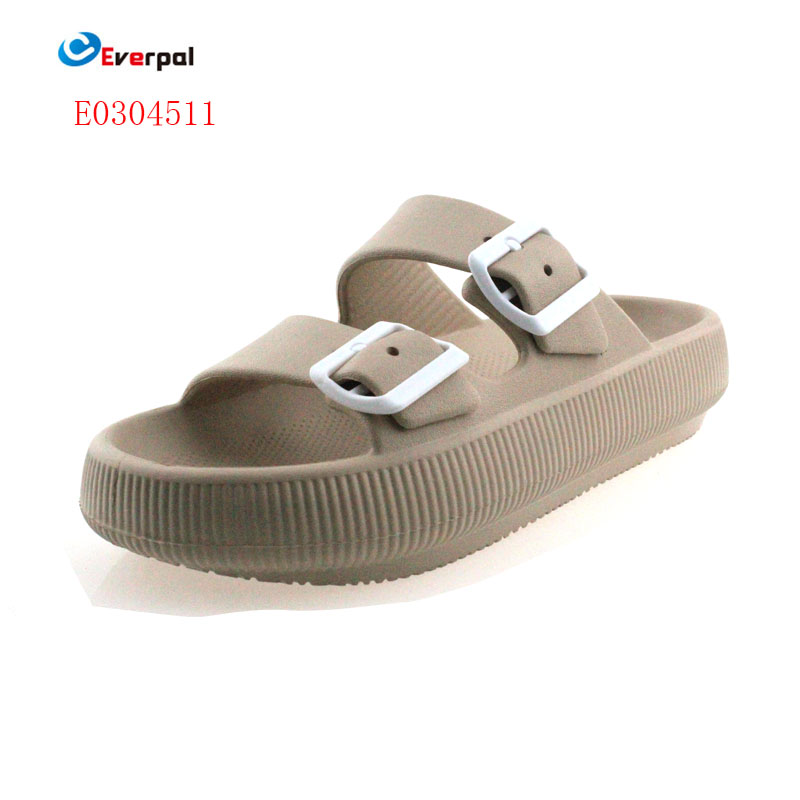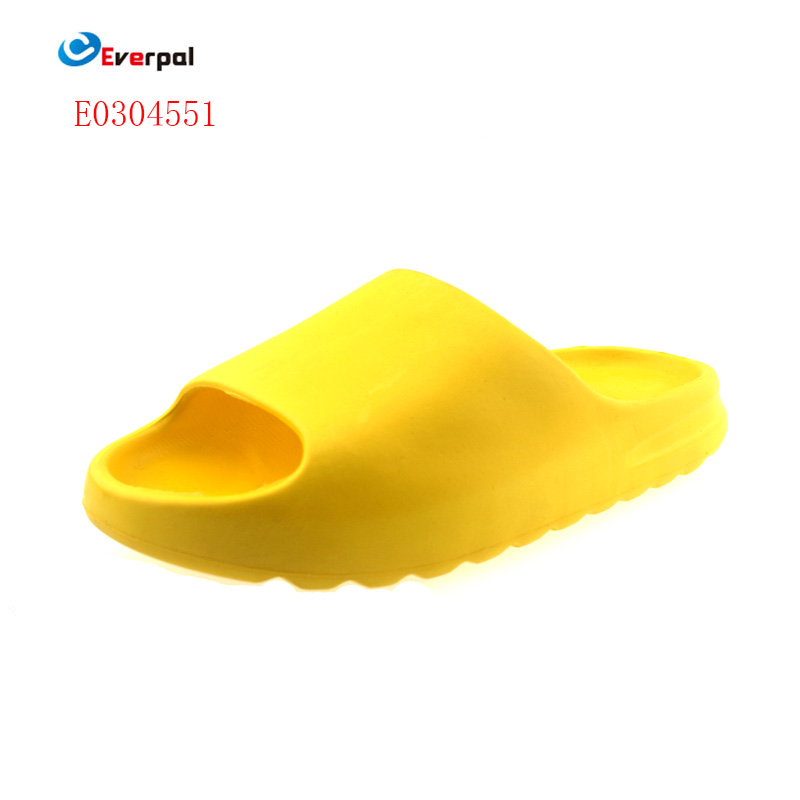
Grip and traction are important performance considerations when sourcing Women's Clogs Slippers for retail, private-label collections, hospitality use, and everyday wear. Although a clog may look comfortable and easy to manufacture, its actual stability depends on several interacting factors, including outsole material, tread geometry, rubber hardness, contact area, surface contamination, and moisture. For buyers, understanding these variables makes it easier to compare supplier samples, assess product suitability, and reduce the risk of customer complaints caused by unexpected slipping.
At Xiamen Everpal Trade Co., Ltd, we recognize that selecting footwear involves more than comparing appearance and unit price. Our purchasing recommendations focus on measurable specifications, realistic use conditions, repeatable testing, and clear communication between the buyer and manufacturer. This guide explains how each factor influences traction, what technical details should be requested during sourcing, and how procurement teams can evaluate Women's Clogs Slippers before approving bulk production.
1. What Outsole Materials Influence Grip and Traction?
2. How Do Tread Patterns Affect Traction on Different Surfaces?
3. Why Do Hardness, Contact Area, and Sole Structure Matter?
4. How Can Buyers Evaluate Traction Before Bulk Purchasing?
5. What Surface Conditions and Wear Factors Change Grip Performance?
6. Conclusion and Purchasing Recommendations
Outsole material determines how the bottom of a clog interacts with the floor. It affects friction, deformation, abrasion resistance, flexibility, and the ability of the tread to maintain contact with a surface. For buyers comparing Women's Clogs Slippers, material selection should therefore begin with the intended application rather than color, appearance, or the lowest available manufacturing cost.
Different polymer families offer different performance characteristics. However, a material name alone cannot establish whether a finished shoe will be slip-resistant. Formulation, additives, surface texture, molding quality, temperature, and the condition of the test surface can all change the result.
| Outsole material | Potential performance characteristics | Purchasing considerations |
| EVA | Lightweight construction, cushioning, and flexible designs | Request finished-sole traction results because foam density, skin texture, and tread design can vary considerably. |
| Rubber | Can provide good friction, abrasion resistance, and flexibility when correctly formulated | Confirm the rubber compound, hardness range, tread geometry, and test results for the intended floor conditions. |
| TPR | Thermoplastic construction with formulation-dependent flexibility and wear properties | Evaluate the specific compound rather than assuming every TPR outsole offers equivalent traction. |
| PU | Can provide cushioning, flexibility, or durable construction depending on the formulation | Check surface texture, resistance to wear, hydrolysis requirements where relevant, and performance after conditioning. |
| Phylon or other EVA-based foam constructions | Lightweight cushioning and design flexibility | Determine whether the exposed outsole surface is designed for direct floor contact or requires a separate traction component. |
These are general material characteristics, not a ranking of finished footwear. A carefully engineered EVA outsole may outperform a poorly designed rubber outsole under a particular test condition. Similarly, a compound that performs well on a dry indoor floor may not deliver equivalent results on wet ceramic tile or a floor contaminated with detergent.
When reviewing a supplier specification, our first recommendation is to separate material identification from verified performance. A declaration that the sole is made from rubber, EVA, or TPR tells the buyer what type of material is being used, but it does not independently prove how much traction the finished shoe provides.
Lightweight construction is attractive for casual footwear because it can make the shoe easier to wear for extended periods. However, reducing outsole weight should not compromise the contact geometry, structural stability, or durability needed for the target market. Buyers should evaluate the complete footwear construction instead of choosing a compound solely because it is light or inexpensive.
For example, a retailer developing a summer collection may prioritize a lightweight foam sole, while a buyer sourcing clogs for a cleaning or hospitality environment may place greater emphasis on verified wet-floor performance. These products may share a similar silhouette but require different specifications and validation procedures.
When reviewing a sample, ask the supplier to identify the actual outsole material, document the agreed construction, and provide relevant finished-footwear test evidence. Our factory-related discussions should also cover whether the approved material and tooling will remain consistent throughout production. Xiamen Everpal Trade Co., Ltd can use these requirements as the basis for clearer product comparisons and purchasing communication.
The practical rule is straightforward: choose the material for the intended surface, operating conditions, and required service life. Never treat a generic material description as a substitute for testing the completed shoe.
Tread design influences how the outsole contacts a floor, manages surface moisture, and maintains useful friction during walking. For Women's Clogs Slippers, the pattern must work with the material compound and overall sole geometry. Deep grooves may look more technical, but tread depth alone does not establish better grip. A pattern that performs well on a rough outdoor path may behave differently on a smooth indoor floor.
An outsole tread is a system of raised contact areas, grooves, channels, edges, and recesses. Each element changes the way forces are transferred between the shoe and the ground. When the wearer walks, the sole must resist sliding in the directions associated with forward movement, braking, turning, and lateral weight transfer.
| Tread design feature | Potential benefit | Points to verify |
| Directional grooves | Can support traction in particular movement directions | Evaluate forward, backward, and turning movements where relevant. |
| Multidirectional patterns | Can provide tread edges in more than one direction | Check whether the pattern maintains useful contact during lateral movement. |
| Fine textured surfaces | Can increase the number of small surface features | Confirm that the texture remains effective after wear and is not easily clogged. |
| Wide drainage channels | May help manage water or certain contaminants | Inspect channel continuity, depth, and the remaining contact area. |
| Broad contact blocks | Can provide structural support and stable contact on suitable surfaces | Assess the balance between contact geometry, flexibility, and contaminant evacuation. |
These design features should be treated as options for evaluation, not as guaranteed solutions. A tread pattern may perform differently when paired with a softer compound, a harder compound, or a different sole curvature. For that reason, comparing tread photographs alone is insufficient for a purchasing decision.
Deep grooves can create space for water or loose particles to move, but they also reduce the area occupied by raised contact blocks. If the blocks are too narrow, unstable, or widely spaced for the intended application, they may deform under load or provide inconsistent contact. A heavily grooved sole may also trap certain materials rather than release them.
On smooth indoor flooring, the relationship between groove design and friction is particularly important. A pattern intended for rough surfaces may have too little effective contact with a flat floor, while an outsole with a more continuous contact surface may perform well under some conditions. The outcome depends on the compound, floor finish, contaminant, load, and movement.
Start by examining the outsole from several angles under consistent lighting. Check the heel, forefoot, edges, and central contact areas. Look for incomplete molding, blocked grooves, inconsistent tread depth, damaged edges, and differences between left and right shoes.
Do not approve a design simply because its outsole looks aggressive. Instead, ask what the pattern is intended to accomplish and how that function has been verified. Xiamen Everpal Trade Co., Ltd recommends documenting the agreed tread configuration in the purchase specification so that design substitutions can be identified before bulk shipment.
For buyers developing Women's Clogs Slippers for different channels, tread requirements should be linked to the end user's environment. Everyday fashion clogs, garden footwear, and work-oriented clogs do not automatically need identical patterns. A clear application brief makes sample evaluation more relevant and helps suppliers avoid unnecessary design changes.
Outsole hardness, contact area, and structural geometry influence how footwear responds to a floor under load. These factors are closely related, but they should not be treated as interchangeable measurements. Hardness describes a material's resistance to indentation under a specified test method. Contact area describes the portions of the outsole that actually touch the floor under particular conditions. Sole structure determines how those portions deform as the wearer moves.
No. A softer compound may conform more readily to small surface irregularities, which can improve friction in some material and surface combinations. However, excessive softness may lead to rapid wear, deformation, instability, or poor performance under other conditions. A harder compound may preserve tread geometry and resist abrasion, yet it may not adapt as effectively to certain floor textures.
The relationship between hardness and traction depends on the compound's viscoelastic properties, surface roughness, temperature, load, speed, and contaminant. Consequently, a hardness value cannot be used on its own to predict a shoe's slip resistance.
| Property | What it describes | How buyers should use it |
| Shore hardness | Resistance to indentation measured using a specified Shore scale and method | Compare results only when the scale, method, specimen, and conditions are appropriate and consistent. |
| Sole thickness | The thickness of the outsole or specified sole section | Check comfort, durability, flexibility, and design consistency rather than assuming greater thickness improves grip. |
| Contact geometry | The distribution and shape of outsole areas that touch the floor | Inspect the heel, forefoot, edges, and loaded contact areas. |
| Flexural behavior | How the sole bends and recovers during movement | Check that the design supports natural walking without excessive bending or unwanted rigidity. |
| Compression behavior | How the material deforms under a compressive load | Consider whether cushioning or deformation changes the stability of the finished footwear. |
| Wear resistance | The ability to resist material loss under defined abrasive conditions | Review relevant test evidence and establish acceptable limits for the intended product. |
It is tempting to assume that increasing the outsole's contact area will always increase traction. In practice, friction is more complicated. Under some dry conditions, friction does not rise in direct proportion to apparent contact area. On contaminated or wet floors, however, contact geometry can strongly influence how the surface film is managed and whether the outsole can establish effective contact with the floor.
The distribution of contact is often more useful to examine than the nominal size of the sole. A clog may have a wide outsole but limited contact at the heel because of its curvature. Another design may have a similar footprint but a more stable distribution of contact blocks. These differences can influence how the footwear responds when the wearer shifts weight or turns.
For procurement purposes, examine the outsole in a neutral position and, where feasible, under a representative load. Observe whether the sole rocks, twists excessively, or shows an unexpected gap at important contact areas. These observations are useful screening checks, but they do not replace standardized traction testing.
Grip and whole-shoe stability are related but different. An outsole can provide substantial friction while the upper allows the foot to move excessively inside the shoe. Conversely, a secure upper cannot compensate for inadequate outsole traction on a slippery surface.
Buyers should avoid vague instructions such as soft sole, strong grip, or high-quality material. Instead, record the material grade or agreed compound description, hardness range and method, outsole thickness at defined measurement points, tread design, size range, and applicable performance requirements. The supplier should identify which values are confirmed specifications and which remain subject to development or testing.
Because material hardness can vary with temperature and testing conditions, measurements should be compared using consistent procedures. If a buyer needs a specific hardness range, the purchase agreement should state the test method and acceptable tolerance rather than relying on a verbal description.
For private-label projects, Everpal can use an agreed specification sheet to clarify the design expectations before production approval. This approach helps purchasing teams compare quotations on a like-for-like basis and reduces the risk of receiving footwear that matches a photograph but differs in material or construction.
The central lesson is that no single measurement establishes stability. The material, tread, contact geometry, upper fit, and overall construction must work together. When evaluating Women's Clogs Slippers, buyers should combine dimensional inspection, material documentation, wear considerations, and finished-product traction evidence.
Pre-production validation is one of the most effective ways to reduce uncertainty when sourcing footwear. A sample can look well made and feel comfortable in the hand yet behave differently under a person's weight on a wet or contaminated floor. Buyers should therefore establish a documented evaluation process before placing a large order, especially when the product description includes claims about slip resistance or use in demanding environments.
A useful plan begins with the intended market and use conditions. The buyer should identify the likely floor types, the presence of water or cleaning agents, the expected walking activities, and the relevant product safety requirements. The supplier can then determine which material checks and finished-footwear tests are appropriate.
There is no single universal test that proves footwear will be slip-resistant on every floor. Depending on the market, intended use, and product classification, buyers may need to consider footwear-specific requirements and applicable testing standards. For occupational footwear, ISO 20345 and related standards may be relevant, but applicability depends on the product's intended classification and the current requirements. The exact standard, edition, test surface, and acceptance criteria must be confirmed with a qualified laboratory or compliance specialist.
ASTM F2913 is another method used to evaluate the coefficient of friction of footwear using a whole-shoe test procedure. Buyers should verify the current edition, scope, and suitability for their product and target market before including it in a purchasing specification. A test report should identify the method used and the conditions under which the results were obtained.
It is important not to confuse a component test with a finished-footwear test. A material coupon may provide useful information about a compound, but it does not reproduce every feature of the completed shoe, including tread geometry, sole curvature, structural stiffness, or contact distribution.
| Specification field | Information to record | Reason for recording it |
| Product identification | Style number, size range, color, version, and intended application | Ensures the test report corresponds to the correct product. |
| Outsole construction | Material description, compound reference where available, and sole configuration | Reduces ambiguity when materials or construction change. |
| Hardness | Target range, Shore scale, method, and agreed tolerance | Allows consistent comparison of material samples. |
| Tread dimensions | Relevant groove depth, spacing, pattern drawing, and critical dimensions | Helps maintain design consistency during production. |
| Traction assessment | Test method, surface, contaminant, results, date, and laboratory details where applicable | Provides evidence tied to specific test conditions. |
| Quality acceptance | Inspection level, defect definitions, sampling plan, and pass criteria | Creates a shared basis for production inspection. |
| Change control | Approval process for changes to material, tooling, or construction | Prevents unreviewed changes from undermining the approved specification. |
Descriptions such as anti-slip, non-slip, superior grip, or professional-grade are not sufficient evidence on their own. Ask for the underlying report and confirm that the tested product matches the model being purchased. Check whether the results cover the relevant surface conditions and whether the test method is suitable for the intended claim.
A report showing good performance on a dry surface does not establish equivalent performance on a wet floor. Likewise, a result obtained using an outsole material sample should not automatically be presented as a result for the finished shoe. If a supplier cannot provide suitable test evidence, treat the claim as unverified until appropriate testing is completed.
Once a sample has been approved, purchasing teams should retain a reference sample, the final specification, and the test documentation. During production, inspectors can compare material identity, tread geometry, sole dimensions, bonding, and visible workmanship against those approved references.
Where traction performance is a critical requirement, a visual inspection alone is insufficient. Buyers should agree in advance whether periodic laboratory testing, third-party verification, or other validated checks are necessary. The inspection frequency should reflect the product risk, production volume, and degree of process control rather than being selected arbitrarily.
For a supplier relationship to work well, both parties need to know what evidence is required before shipment. Everpal encourages buyers to communicate intended use, target markets, and testing expectations early in the quotation process. Clear documentation makes it easier to compare suppliers, investigate deviations, and maintain consistent quality across repeat orders.
The goal is not to test every possible condition without purpose. It is to identify the realistic risks, choose appropriate methods, establish acceptance criteria, and verify that the production footwear continues to match the approved design.
Traction is not a fixed property that remains identical in every environment. The same pair of Women's Clogs Slippers may perform differently on dry concrete, polished tile, wet ceramic flooring, dusty surfaces, or floors contaminated with cleaning products. Temperature, surface texture, footwear wear, and walking movement can all influence the interaction between the outsole and the ground. Buyers should therefore assess traction in the context of the actual conditions in which customers will use the product.
Contaminants can alter the interface between the sole and floor. Water may form a film that reduces direct contact under some conditions. Oil, grease, detergent residues, and fine dust can create different forms of contamination, each of which interacts differently with outsole materials and tread patterns.
Buyers should avoid using a single informal test to represent all these conditions. A shoe that appears secure on a damp patio may behave differently on a smooth floor with detergent residue. Where the product will be marketed for a specific demanding environment, the evaluation should reproduce the relevant conditions through an appropriate, controlled method.
Temperature can change the stiffness and viscoelastic behavior of footwear compounds. Some materials become firmer in cold conditions, while others may soften as temperatures rise. These changes can affect tread deformation, contact with the floor, comfort, and wear. The magnitude and direction of the effect depend on the material formulation and the temperature range.
For buyers supplying products to different climates, it is sensible to define the expected storage, transport, and use temperatures. If the footwear is intended for unusually hot or cold environments, ask the supplier whether conditioning or performance testing is necessary. Material data and testing should support any temperature-related claims.
As a shoe is used, the edges of its tread can become rounded, the groove depth can decrease, and the contact surface can become smoother. Wear may occur unevenly, particularly if the wearer places more weight on one side of the foot or regularly walks on abrasive surfaces. These changes can affect the original tread design and the way the outsole interacts with contaminants.
Wear resistance and traction are related but distinct properties. An outsole that loses little material in an abrasion test is not automatically the most slip-resistant outsole. Conversely, a compound with useful initial friction may require careful evaluation to determine how its performance changes after repeated use.
For procurement teams, the appropriate question is not simply how long the outsole lasts. It is whether the footwear retains acceptable performance throughout its expected service life. Where the use case justifies it, consider testing or evaluating traction after representative wear conditioning. The method and acceptance criteria should be selected before the evaluation begins.
A visual inspection cannot prove traction performance, but it can identify defects that deserve investigation. Examine each sample and, during bulk quality control, use an agreed sampling plan to check for the following issues.
These checks should be interpreted within the approved quality standard. Not every cosmetic variation creates a traction risk, and not every visually perfect outsole performs well under slippery conditions. Defects should be classified according to their actual impact and the agreed acceptance criteria.
Product descriptions should explain the intended application without promising universal slip prevention. If the footwear has been tested under defined conditions, the marketing statement should accurately reflect the scope of the evidence. Avoid suggesting that the product is safe on every wet, oily, or contaminated surface unless the claim is supported by appropriate evidence and permitted under applicable requirements.
Retailers should also explain that traction can deteriorate with wear and that contaminants should be removed according to the care instructions. Customers working in environments with specific occupational footwear requirements should select products that meet those requirements rather than relying on a casual clog design.
For purchasing teams, this information can guide product segmentation. Everyday leisure footwear may be appropriate for ordinary casual use, while demanding work environments may require a separately specified and validated product. Xiamen Everpal Trade Co., Ltd recommends agreeing on the target use case before finalizing the outsole design, packaging claims, and quality inspection plan.
Ultimately, traction is a performance outcome created by the interaction of material, tread, surface, load, movement, and wear. Understanding those variables allows buyers to specify Women's Clogs Slippers more accurately, avoid unsupported claims, and choose a product suited to the expectations of their customers.
Grip and traction in Women's Clogs Slippers depend on the complete footwear system rather than one isolated feature. Outsole material influences friction and deformation, tread geometry affects contact and contaminant management, and hardness and sole structure influence how the shoe responds under load. Floor conditions, temperature, contamination, and wear can then change performance during actual use.
For buyers, the most reliable sourcing process combines clear product requirements with appropriate verification. Before placing a bulk order, confirm the outsole material, record critical dimensions, review the tread design, define the intended application, and request relevant finished-footwear test evidence where traction is an important selling point. Establish a reference sample and a written procedure for approving changes to materials or construction.
Our purchasing approach prioritizes transparent specifications and practical quality controls over unsupported performance promises. When reviewing quotations, compare suppliers against the same technical requirements rather than relying on product photographs, generic anti-slip descriptions, or unit price alone. This makes it easier to assess the actual value of each offer and identify risks before production.
If you are developing a new clog collection, expanding an existing range, or sourcing private-label footwear, Xiamen Everpal Trade Co., Ltd welcomes inquiries about product specifications, outsole options, sample evaluation, and order requirements. Share your target market, intended use, preferred materials, size range, and any applicable traction standards so that the proposed product can be assessed against your purchasing needs. A clear technical brief is the starting point for a more consistent product and a more dependable supplier relationship.
There is no universally best outsole material because traction depends on the specific compound, tread design, floor surface, contaminants, temperature, and wear. Rubber may offer a useful balance of friction and abrasion resistance in some applications, while EVA, TPR, and PU can also be suitable when their formulations and constructions are appropriately designed. Buyers should compare finished-footwear test results under the intended conditions instead of selecting a material based on its name alone.
No. Deeper grooves can create channels for water or loose particles, but they also reduce the area occupied by raised contact blocks and may retain certain contaminants. Tread effectiveness depends on groove orientation, width, continuity, contact block stability, outsole compound, and the floor being used. The best purchasing decision is based on the performance of the complete outsole under relevant test conditions, not groove depth alone.
Buyers should request a relevant test report that identifies the tested footwear model, test method, surface material, contaminant conditions, measured results, and acceptance criteria. Depending on the application and market, a footwear-specific standard or an appropriate whole-shoe friction test may be required. A generic product description, material certificate, or dry-floor demonstration is not sufficient to establish performance on wet or contaminated floors.
The appropriate inspection frequency depends on the product risk, order volume, production consistency, material-change controls, and contractual requirements. At a minimum, buyers should verify that production footwear matches the approved sample and technical specification. If traction is a critical safety or performance requirement, the purchasing agreement should define whether periodic laboratory testing, third-party verification, or additional checks are needed, along with the sampling method and acceptance criteria.
Not necessarily. Repeated use can round tread edges, reduce groove depth, polish contact surfaces, and cause uneven wear. The extent of the change depends on the compound, walking surface, usage frequency, and maintenance. If long-term traction matters to the target application, buyers should consider representative wear evaluation and, where appropriate, traction testing after conditioning. Customer guidance should also explain that visibly worn or damaged footwear may need replacement and that contaminants should be removed according to the care instructions.
Copyright © 2022 Xiamen Everpal Trade Co., Ltd - Flip Flops, Sandals Slippers, Slides Slippers - All Rights Reserved.