A buyer for a regional footwear distributor places an order for 10,000 pairs of Women's Winter Slippers. The style is right, the price is right, and the delivery date is confirmed. Six weeks after the slippers arrive in stores, the picture is clear. Size 37 and 38 have sold out, while size 41 and 42 are sitting on the shelves. The buyer has lost sales on the popular sizes and is facing markdowns on the slow movers. The problem was not the product. It was the size assortment. The order had been placed with an even spread across all sizes, but the actual demand followed a curve that peaked in the middle and tapered at the ends. This is a common and costly mistake in footwear sourcing, and it is entirely avoidable with the right size assortment planning.
This guide is written for buyers who are sourcing Women's Winter Slippers for retail, wholesale, or e-commerce. We will explain why size assortments matter, how size curves work, how regional and demographic factors affect the curve, how to plan an assortment that matches demand, and how to evaluate a supplier's ability to support your sizing requirements. We will also provide detailed product parameters from our factory at Xiamen Everpal Trade Co., Ltd. Whether you are ordering for a single store or a national chain, this guide will help you avoid the twin traps of stockouts and overstock by getting the size mix right.
A size assortment is the distribution of sizes within an order. It defines how many pairs of each size are included in a given quantity of Women's Winter Slippers. For example, an order of 1,000 pairs might be assorted as 100 pairs each of sizes 36 through 45, or it might follow a curve that allocates more pairs to the middle sizes and fewer to the extremes. The assortment determines whether the order will meet the actual demand in the market. If the assortment is too flat, the popular sizes will sell out and the unpopular sizes will remain. If the assortment is too skewed, the extreme sizes will be underserved. The right assortment matches the size distribution of the target customer base. The table below illustrates the difference between a flat assortment and a curve-based assortment.
| Size (EU) | Flat Assortment (10%) | Curve-Based Assortment |
| 36 | 100 pairs | 50 pairs |
| 37 | 100 pairs | 120 pairs |
| 38 | 100 pairs | 180 pairs |
| 39 | 100 pairs | 200 pairs |
| 40 | 100 pairs | 180 pairs |
| 41 | 100 pairs | 120 pairs |
| 42 | 100 pairs | 80 pairs |
| 43 | 100 pairs | 50 pairs |
| 44 | 100 pairs | 20 pairs |
| 45 | 100 pairs | 0 pairs |
At Xiamen Everpal Trade Co., Ltd., our factory works with buyers to plan size assortments that match their market. We provide historical sales data, regional size distribution guidance, and flexible order quantities by size. Our goal is to help our customers avoid stockouts and overstock by getting the size mix right from the start.
The size curve is the statistical distribution of foot sizes in a given population. For women's footwear, the curve typically peaks in the middle sizes and tapers toward the extremes. In the European sizing system, the peak for women's slippers is often around size 38 or 39, with decreasing demand for sizes below 37 and above 41. The exact shape of the curve depends on the target market, the age distribution of the customers, and the regional fit preferences. The table below shows a typical size curve for Women's Winter Slippers in a European market.
| Size (EU) | Typical Share of Demand | Order Allocation (per 1,000 pairs) |
| 36 | 4% | 40 pairs |
| 37 | 9% | 90 pairs |
| 38 | 18% | 180 pairs |
| 39 | 22% | 220 pairs |
| 40 | 19% | 190 pairs |
| 41 | 13% | 130 pairs |
| 42 | 8% | 80 pairs |
| 43 | 4% | 40 pairs |
| 44 | 2% | 20 pairs |
| 45 | 1% | 10 pairs |
At our factory, we use this curve as a starting point for assortment planning. We then adjust it based on the customer's specific market data. For example, a retailer targeting younger customers may need a curve that peaks at a smaller size, while a retailer targeting older customers may need a curve that peaks at a larger size. Our team can help you calibrate the curve for your specific customer base.
The size curve is not universal. It varies by region, by demographic group, and by the type of product. Regional differences in average foot size are well-documented. In general, populations in Northern Europe tend to have larger feet than populations in Southern Europe. Asian markets often have a curve that peaks at a smaller size than European markets. Demographic factors also matter. Younger customers tend to have a different size distribution than older customers. The type of product also affects the curve. Women's Winter Slippers are often purchased as a comfort item, and customers may size up for a looser fit. This can shift the curve toward larger sizes. The table below summarizes the factors that affect the size curve.
| Factor | Effect on Size Curve | Implication for Assortment |
| Region | Northern Europe larger, Southern Europe smaller | Adjust curve to regional average |
| Demographic | Younger customers smaller, older customers larger | Adjust curve to target age group |
| Product Type | Comfort slippers may be sized up | Shift curve toward larger sizes |
| Season | Winter slippers may be purchased with thicker socks | Shift curve toward larger sizes |
| Sales Channel | Online vs. offline may have different return rates | Adjust curve based on channel data |
At Everpal, our factory works with buyers to understand their target market and to adjust the size curve accordingly. We can provide size curve recommendations based on regional data and product type. Our goal is to help our customers order the right mix of sizes for their specific market.
Planning a size assortment that matches demand requires a combination of historical data, market knowledge, and supplier collaboration. The first step is to review historical sales data for similar products. If the buyer has sold Women's Winter Slippers before, the past sales data will show the actual size distribution. The second step is to adjust the curve for regional and demographic factors. The third step is to consider the product type and the expected fit. The fourth step is to work with the supplier to confirm the available sizes and the minimum order quantities for each size. The fifth step is to review the assortment after the season and adjust for the next order. The table below summarizes this planning process.
| Step | Action | Data Source |
| 1 | Review historical sales data | Past orders, POS data |
| 2 | Adjust for regional and demographic factors | Market research, regional data |
| 3 | Consider product type and fit | Product specifications, customer feedback |
| 4 | Confirm available sizes and MOQs | Supplier catalog, order terms |
| 5 | Review and adjust after the season | Sales results, return data |
At our factory, we support this planning process by providing flexible order quantities by size and by sharing market data with our customers. We can produce Women's Winter Slippers in a range of sizes and can accommodate mixed-size orders. Our goal is to make it easy for our customers to order the right assortment for their market.
Getting the size assortment wrong has financial consequences that go beyond the cost of the slippers themselves. If the assortment is too flat, the popular sizes will sell out, and the retailer will lose sales that could have been captured. If the assortment is too skewed, the extreme sizes will remain unsold, and the retailer will have to mark them down. Both scenarios reduce the profitability of the order. There is also a customer satisfaction risk. A customer who cannot find their size may leave without purchasing, and they may not return. The table below summarizes the risks of an incorrect assortment.
| Risk | Cause | Financial Impact |
| Stockouts | Assortment skewed toward slow sizes | Lost sales on popular sizes |
| Overstock | Assortment includes too many extreme sizes | Markdown costs on unsold inventory |
| Customer Dissatisfaction | Size not available | Lost customers, negative reviews |
| Working Capital | Capital tied up in unsold inventory | Reduced cash flow |
| Storage Cost | Unsold inventory occupies warehouse space | Additional storage expense |
At Xiamen Everpal Trade Co., Ltd., our factory helps our customers avoid these risks by providing assortment planning support. We can help you analyze your historical data, adjust the curve for your market, and order the right mix of sizes. Our goal is to help you maximize sales and minimize markdowns.
Evaluating a supplier's sizing capability is essential for ensuring that the size assortment you plan can actually be produced and delivered. The supplier must offer a full range of sizes, from small to large, and must be able to produce mixed-size orders without excessive minimum order quantities per size. They must have accurate sizing that conforms to the declared size chart, and they must have the quality control to ensure that each pair is correctly sized. The table below summarizes the evaluation criteria.
| Evaluation Criterion | What to Look For | Why It Matters |
| Size Range | Full range from small to large | Ensures all customer sizes are covered |
| Mixed-Size Order Flexibility | Low MOQ per size | Allows assortment planning |
| Sizing Accuracy | Conforms to declared size chart | Prevents fit complaints and returns |
| Quality Control | Size verification on every batch | Ensures consistent sizing |
| Market Experience | Knowledge of regional size curves | Supports assortment planning |
At our factory, we offer a full range of sizes for our Women's Winter Slippers and can accommodate mixed-size orders with low minimum order quantities per size. We verify the sizing of every batch before shipment. And we have extensive experience with regional size curves in Europe, North America, and Asia. We invite you to evaluate us against these criteria and to consider us as your partner for Women's Winter Slippers.
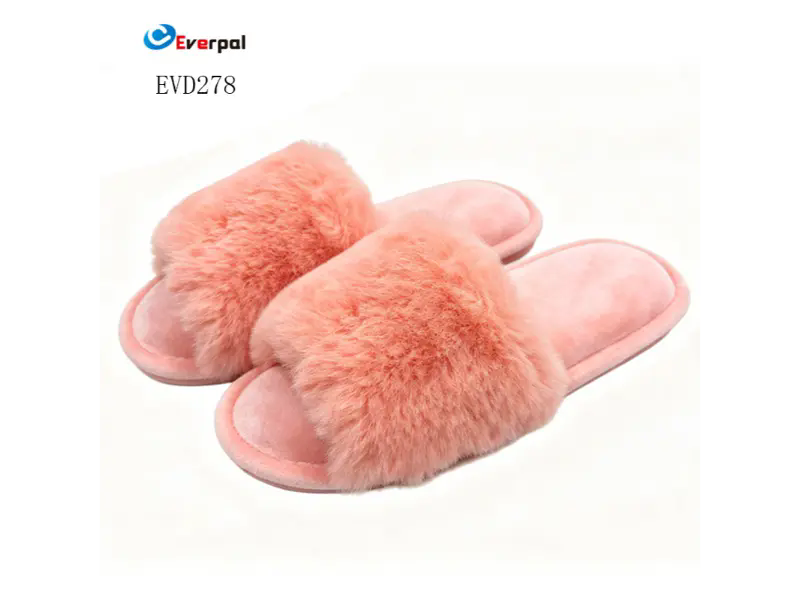
The following table provides the key product parameters for our Women's Winter Slippers. These slippers are designed for comfort and warmth in cold weather, and they are available in a full range of sizes to support assortment planning. Our factory can also produce custom slippers to meet specific requirements.
| Parameter | Specification Range | Notes |
| Size Range (EU) | 36 - 45 | Other size systems available |
| Upper Material | Faux fur, suede, velvet, knit | Selected for warmth and style |
| Lining Material | Fleece, faux fur, cotton | Selected for comfort and warmth |
| Sole Material | TPR, EVA, rubber | Selected for indoor/outdoor use |
| Sole Type | Anti-slip, indoor, outdoor | Selected for application |
| Colors | Custom | Seasonal palettes available |
| MOQ per Size | 50 pairs | Mixed-size orders accepted |
| Lead Time | 3 - 5 weeks | Depends on quantity and customization |
At our factory, we manufacture our Women's Winter Slippers to meet these specifications and more. We can customize the materials, colors, and packaging to suit your specific requirements. Our quality control system includes inspection of raw materials, in-process inspection, and final inspection before shipment. Our goal is to provide our customers with high-quality Women's Winter Slippers that meet their assortment planning needs.
Question 1: Why can't I just order an even spread across all sizes?
Answer: An even spread across all sizes assumes that demand is the same for every size. In reality, demand follows a curve that peaks in the middle sizes and tapers at the extremes. If you order an even spread, the popular sizes will sell out and the extreme sizes will remain unsold. Ordering according to the curve ensures that your inventory matches actual demand.
Question 2: How do I know what size curve to use for my market?
Answer: Start with historical sales data for similar products in your market. If you don't have historical data, use regional size distribution data as a starting point. Adjust the curve for your target demographic and product type. For Women's Winter Slippers, customers often size up for a looser fit with thick socks, so the curve may shift toward larger sizes. Our team can help you calibrate the curve for your specific market.
Question 3: What is the minimum order quantity per size for your Women's Winter Slippers?
Answer: Our standard minimum order quantity is 50 pairs per size, which allows buyers to plan a realistic assortment without over-ordering any single size. For larger orders, we can offer more flexible terms. Please contact our sales team to discuss your specific requirements.
Question 4: Can I mix sizes within a single order?
Answer: Yes, we accept mixed-size orders for our Women's Winter Slippers. You can specify the quantity for each size within the order, and we will produce and pack the slippers accordingly. We recommend providing a size breakdown with your order to ensure that the assortment matches your plan.
Question 5: How do I handle size returns from my customers?
Answer: Size-related returns are usually caused by inaccurate sizing or a mismatch between the customer's expectation and the actual fit. To minimize returns, ensure that the supplier's size chart is accurate and that the sizing is consistent across batches. Provide clear sizing guidance on your product listings, and consider offering a size exchange policy. Our factory verifies the sizing of every batch to help reduce size-related returns.
Size assortments matter when sourcing Women's Winter Slippers because they determine whether the order will meet actual demand. A flat assortment leads to stockouts on popular sizes and overstock on extreme sizes. A curve-based assortment matches the statistical distribution of foot sizes in the target market, maximizing sales and minimizing markdowns. By understanding the size curve, adjusting it for regional and demographic factors, planning the assortment with historical data, and working with a supplier that supports flexible sizing, buyers can avoid the twin traps of stockouts and overstock. At Xiamen Everpal Trade Co., Ltd., our factory supports assortment planning with flexible order quantities, accurate sizing, and market knowledge.
Whether you are sourcing Women's Winter Slippers for a single store or a national chain, we invite you to contact us to discuss your requirements. We can provide size curve recommendations, samples, and customized solutions. Our commitment to quality and customer satisfaction has made us a trusted partner for footwear buyers around the world.
Contact Xiamen Everpal Trade Co., Ltd. today to discuss your Women's Winter Slippers requirements and discover how our sizing support can help you build the right assortment.
Copyright © 2022 Xiamen Everpal Trade Co., Ltd - Flip Flops, Sandals Slippers, Slides Slippers - All Rights Reserved.